
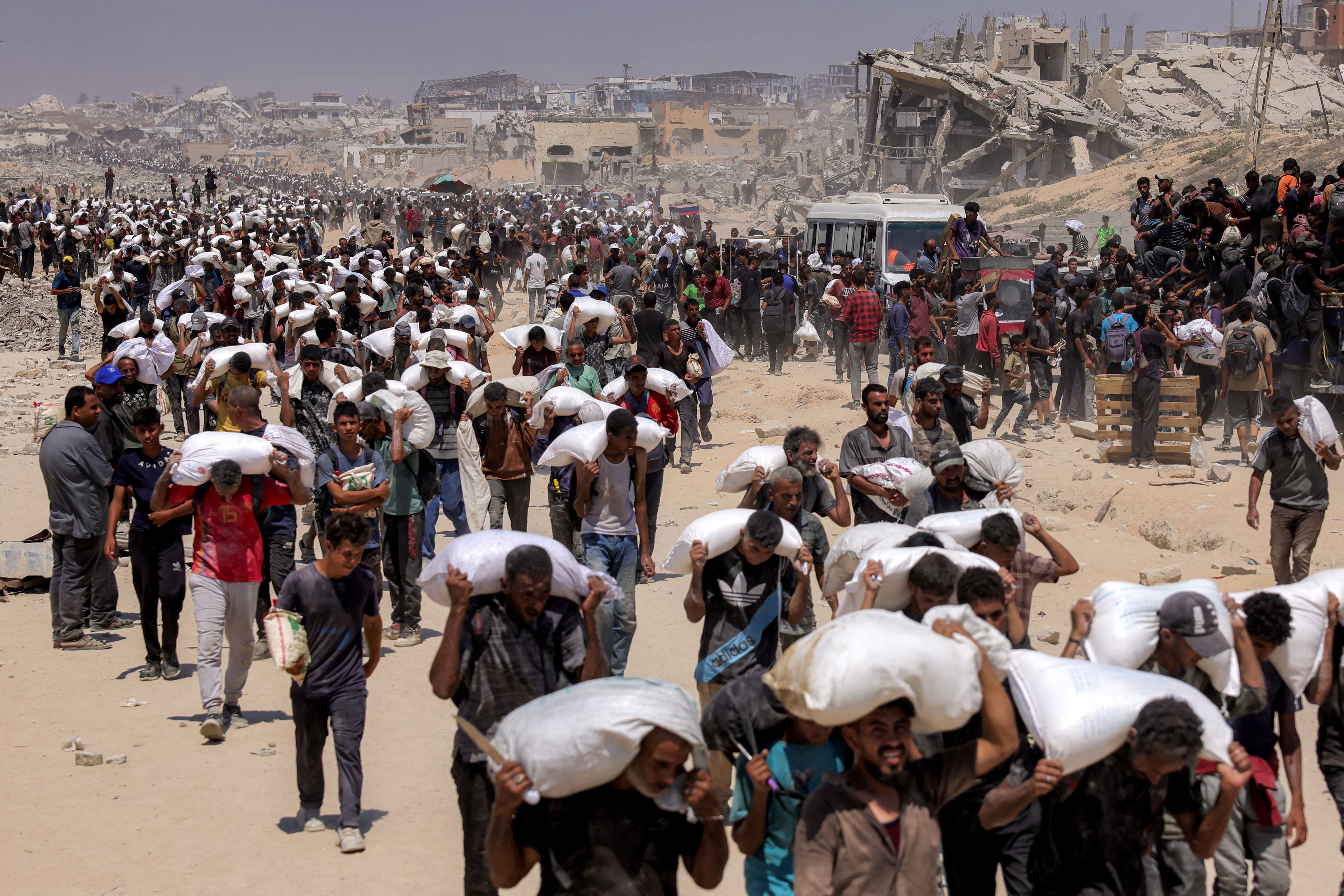

In the midst of ongoing instability and violence, local armed groups in Gaza have taken on an increasingly complex and controversial role: protecting the flow of humanitarian aid into a region overwhelmed by crisis. While their presence is a response to the need for security in a fragmented and volatile environment, it also highlights the challenges of delivering assistance in areas where traditional governance structures have eroded.
As aid shipments make their way through limited and frequently targeted entry points, the responsibility of ensuring their safe arrival and distribution often falls not to official institutions, but to local factions. These armed groups, operating in a context of deep mistrust and political fragmentation, now play a significant part in the logistics of relief—escorting convoys, guarding storage facilities, and managing checkpoints.
However, this development is not without controversy. While some view these groups as filling a necessary void, others express concern about the implications of armed actors overseeing the delivery of basic humanitarian services. The intertwining of aid and militarized structures creates a complex web of interests that can complicate the neutrality and transparency of humanitarian operations.
The collapse of public order in parts of Gaza has made it extremely difficult for conventional aid organizations to operate effectively. Warehouses have been looted, supply convoys attacked, and aid workers threatened or obstructed. In such an environment, the emergence of local armed protectors has been described by some as a pragmatic response to a security vacuum.
Several of these organizations assert that their initiatives are motivated by a commitment to guarantee that essentials such as food, medicine, and housing are delivered to civilians in urgent need. They frequently work alongside local communities and informal systems to create order in the allocation process. In regions where confidence in official institutions has significantly declined, this grassroots collaboration might be the sole effective method for providing assistance.
However, the boundary between safeguarding and exerting control can be narrow. There have been accounts indicating that certain groups might be distributing assistance selectively, based on allegiance or association, which threatens the fundamental principle of neutrality essential to humanitarian efforts. The absence of independent supervision in numerous regions complicates the validation of these allegations, but the danger of aid becoming politicized remains a constant issue.
International relief organizations, already facing constraints due to logistical complications and limited funding, encounter further difficulties when dealing with armed groups. Gaining access often involves delicate negotiations, and even with agreements in place, there is no assurance that aid will be distributed without obstacles.
Attempts to collaborate with these groups have yielded varied outcomes. Several humanitarian organizations have successfully established partnerships that enable fairly safe entry to impacted communities. Conversely, others have fully ceased operations in specific areas, referencing intolerable risks to personnel or worries about misuse of aid.
Meanwhile, the civilian population bears the brunt of the dysfunction. In overcrowded shelters and damaged neighborhoods, people wait for hours or even days in hopes of receiving limited supplies. The reliance on armed escorts is a visible reminder of the breakdown of civil infrastructure and the ongoing insecurity that defines daily life in Gaza.
The involvement of armed factions in ensuring the delivery of assistance prompts broader inquiries about the enduring future of humanitarian endeavors in areas of conflict. When groups independent of the state play a key role in providing aid, the lines separating relief work, political interests, and conflict become hazy. This situation not only adds complexity to the objectives of aid organizations but can also shape local power dynamics, occasionally strengthening the position of entities with minimal accountability.
From a policy perspective, these developments underscore the need for more sustainable and inclusive strategies to rebuild governance and trust in crisis-affected regions. While emergency aid remains essential, it cannot substitute for stable institutions and equitable social services. Ultimately, the goal should be to create conditions in which humanitarian assistance can be delivered transparently, safely, and without armed intervention.
As disputes persist and a solution to the conflict seems distant, the influence of militias in controlling humanitarian assistance will probably continue to shape the aid environment in Gaza. This situation highlights both the strength of local participants and the vulnerability of a system facing significant stress.
Given these challenges, the global community has the responsibility to assist initiatives that focus on civilian safeguarding, adhere to humanitarian values, and aim to reestablish the basic structures of a functioning society. This encompasses both the physical reconstruction of infrastructure and the restoration of trust, legitimacy, and the rule of law—components vital for any significant and enduring recovery.