
Social Responsibility

Guatemala: CSR cases strengthening child nutrition and community education

Guatemala: CSR programs tackling child malnutrition and boosting community education

Guatemala confronts one of Latin America’s most severe rates of chronic childhood malnutrition, with stunting affecting nearly half of all children under five in many rural and indigenous areas. Ongoing poverty, restricted access to reliable early childhood services, recurring periods of food insecurity, and deficiencies in water, sanitation, and health systems combine to form a complex challenge: inadequate nutrition hinders children’s ability to learn, while under-resourced education structures diminish families’ long-term opportunities. Corporate social responsibility (CSR) initiatives that integrate nutrition programs with community learning and local economic support can simultaneously tackle several drivers of risk and foster impact that is…
Read More
Mexico: CSR cases supporting local suppliers and reducing urban waste

Mexico’s CSR initiatives for sustainable local suppliers and urban waste control

Mexico faces two intersecting sustainability challenges: a high volume of urban waste and a need to strengthen the competitiveness of local suppliers. Major urban centers generate millions of tons of municipal solid waste each year; recycling rates for household and commercial waste remain under 10% in many regions, and informal waste-picking plays a substantial role in material recovery. At the same time, small and medium suppliers—farmers, processors, workshops, and logistics providers—often lack access to formal procurement channels, financing, or quality-assurance support required to enter large corporate supply chains.Corporate social responsibility (CSR) programs in Mexico are increasingly addressing both problems together:…
Read More
Côte d’Ivoire: cocoa CSR with traceability and better incomes for growers

Cocoa & Forests Initiative: driving change in the Ivory Coast cocoa sector

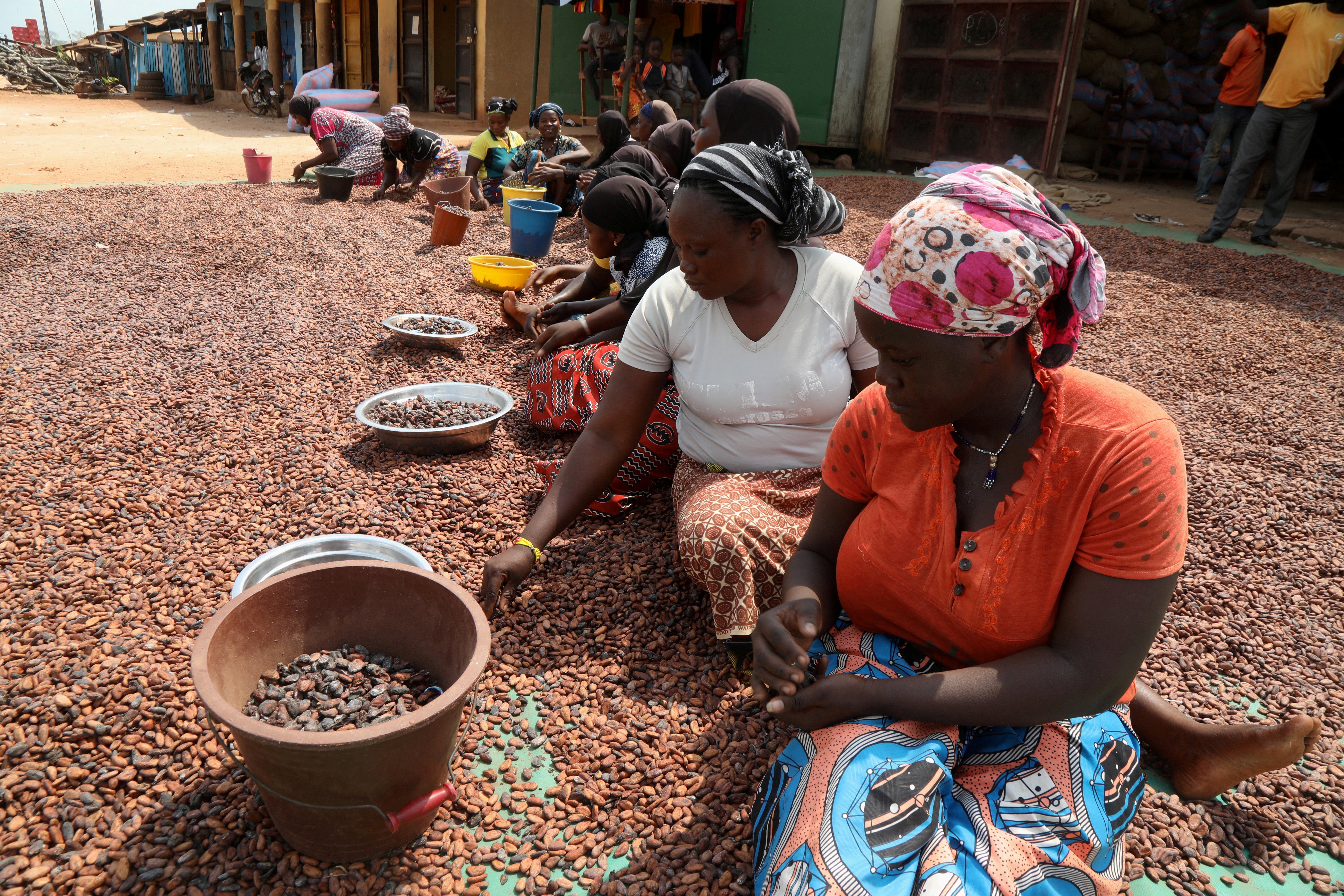
Ivory Coast generates about 40% of the world’s cocoa, yielding nearly 2 million metric tons in recent years, and this crop remains vital to national export revenue as well as to the daily income of countless smallholder households; however, the industry continues to grapple with entrenched issues such as limited farmer earnings, ongoing child labor, aging plantations with weak yields, widespread deforestation, and disjointed supply networks, while corporate social responsibility initiatives paired with advanced traceability technologies are increasingly viewed as tools capable of connecting industry profitability with meaningful social and environmental progress.The CSR environment: regulations, corporate pledges, and key hurdlesCSR…
Read More
Germany: CSR cases accelerating energy efficiency and clean mobility in industrial cities

CSR in German cities: a key to energy efficiency and clean transport

Germany’s dense network of industrial cities — historically centered on steel, chemicals, and automotive manufacturing — is a critical front in meeting national climate goals. Companies headquartered and operating in places like the Ruhr area, Stuttgart, Wolfsburg, Hamburg, and Leipzig are expanding corporate social responsibility (CSR) programs that go beyond philanthropy to accelerate energy efficiency and cleaner mobility. These corporate efforts, often in partnership with municipal governments and research institutions, translate strategy into measurable action: factory decarbonization, fleet electrification, low-emission public transport, charging infrastructure, workforce retraining, and circular value chains.Context and driversPolicy and targets: Germany aims for greenhouse gas neutrality…
Read More
Bolivia: natural-resources CSR with community consultation and water-access projects

Preventing water harm: CSR in Bolivia’s natural resource industries

Bolivia is a nation where plentiful natural assets—such as minerals, lithium-rich brines, hydrocarbons, forests, and extensive freshwater networks—exist alongside rural and indigenous populations who depend on these ecosystems for their everyday sustenance. Corporate social responsibility (CSR) within extractive and infrastructure industries has increasingly shifted toward a central concern: water. Companies operating in Bolivia now face mounting expectations to prevent damage to water sources, incorporate community perspectives and approval, and implement reliable water-access initiatives that enhance local living conditions while safeguarding surrounding ecosystems.How natural-resource activities affect waterMining: open-pit and underground operations may depress groundwater levels, shift surface hydrology, and lead to…
Read More
Burundi: food-sector CSR cases improving nutrition and climate resilience

Cómo la RSE del sector alimentario impulsa la nutrición y la resiliencia en Burundi

Contextualizing CSR initiatives within Burundi’s food sector to support nutrition and climate resilienceSocioeconomic and nutritional landscape — Burundi is among the world’s poorest countries. Most households depend on smallholder farming for food and income. Child malnutrition is a persistent challenge: historically, widely cited surveys have shown stunting rates among children under five that place Burundi among the countries with the highest burdens of chronic malnutrition. Micronutrient deficiencies, seasonal food gaps and limited dietary diversity are common in rural and urban poor areas alike.Climate vulnerability — Burundi’s agriculture is highly exposed to climate variability. Smallholder systems are sensitive to erratic rains,…
Read More
Charles Schwab Foundation Launches Schwab Moneywise Momentum Grants as Part of a  Million Multi-Year Commitment to Financial Education

Schwab Moneywise Momentum Grants: Charles Schwab Foundation’s $20 million financial education commitment

Charles Schwab Foundation has launched a new nationwide grant initiative designed to bolster financial education delivered through nonprofit organizations, aiming to inspire fresh strategies that empower individuals to gain the understanding and confidence required to make sound financial choices.Access to practical financial education has become ever more crucial as households throughout the United States face escalating living expenses, heavier debt loads, and an economic landscape that continues to evolve quickly. Although discussions about financial wellness often emphasize saving, investing, or preparing for retirement, many people still lack dependable resources that clearly show how everyday money management truly works.In response to…
Read More
Bhutan: tourism CSR preserving culture and limiting impacts on fragile ecosystems

Preserving culture and ecosystems: Bhutan’s tourism CSR approach

Bhutan has become a globally cited example of intentional tourism management that seeks to protect culture and fragile ecosystems while generating revenue for national development. The country’s guiding idea places well-being and conservation ahead of unchecked visitor growth. That orientation is implemented through policy levers, regulated market access, partnerships with the private sector, and community-based approaches that aim to keep tourism benefits local and impacts limited.Key policy instruments and mechanismsHigh-value, low-volume approach: Visitors are required to purchase a government-mandated package that includes a daily conservation and development charge. This mechanism raises revenue and acts as a demand filter to limit…
Read More
Georgia: CSR cases strengthening responsible tourism and local entrepreneurship

Georgia: CSR cases strengthening responsible tourism and local entrepreneurship

Georgia has positioned tourism as a strategic growth sector that links natural assets, cultural heritage, and emerging small enterprises. Responsible tourism and local entrepreneurship reduce leakage of tourist revenue, preserve ecosystems and traditions, and create year-round jobs in rural and mountain communities. When corporate social responsibility (CSR) is intentionally aligned with tourism development, the results are stronger livelihoods, improved visitor experiences, and more resilient communities.Background and magnitudeEconomic role: Tourism has emerged as one of Georgia’s most dynamic sectors in the past decade, representing a substantial portion of service exports and job creation, especially across regions beyond the capital.Geographic opportunity: Mountain…
Read More
Finland: CSR cases promoting lifelong learning and workplace mental well-being

CSR in Finland: fostering lifelong learning and mental health at work

Finland combines a strong public education system, active labor market policies, and a corporate culture that emphasizes social responsibility. That ecosystem makes the country a notable laboratory for corporate social responsibility (CSR) cases that integrate lifelong learning and workplace mental well-being. Employers, non-governmental organizations, public bodies, and innovation funds collaborate to produce scalable interventions that support both societal goals and business resilience.Why lifelong learning and mental well-being matter to CSRCompanies that embed lifelong learning and mental health in their CSR strategies address multiple risks and opportunities:Skills resilience: continuous upskilling reduces redundancy risk and supports digital transformation.Productivity and retention: well-trained and…
Read More