
Former U.S. President Donald Trump is set to arrive in Scotland for a five-day trip that is drawing both international attention and a wave of anticipated protests. The visit, which includes stops at several of his properties in the country, comes at a time of heightened political tension and public debate over his ongoing influence in American and global politics.
Trump’s travel plans reportedly involve time spent at his golf resorts in Turnberry and Aberdeen, locations that have been central to his business interests in the United Kingdom for more than a decade. While the visit is being framed by his representatives as a private tour focused on his business ventures, it is already attracting significant public interest due to his political profile and polarizing legacy.
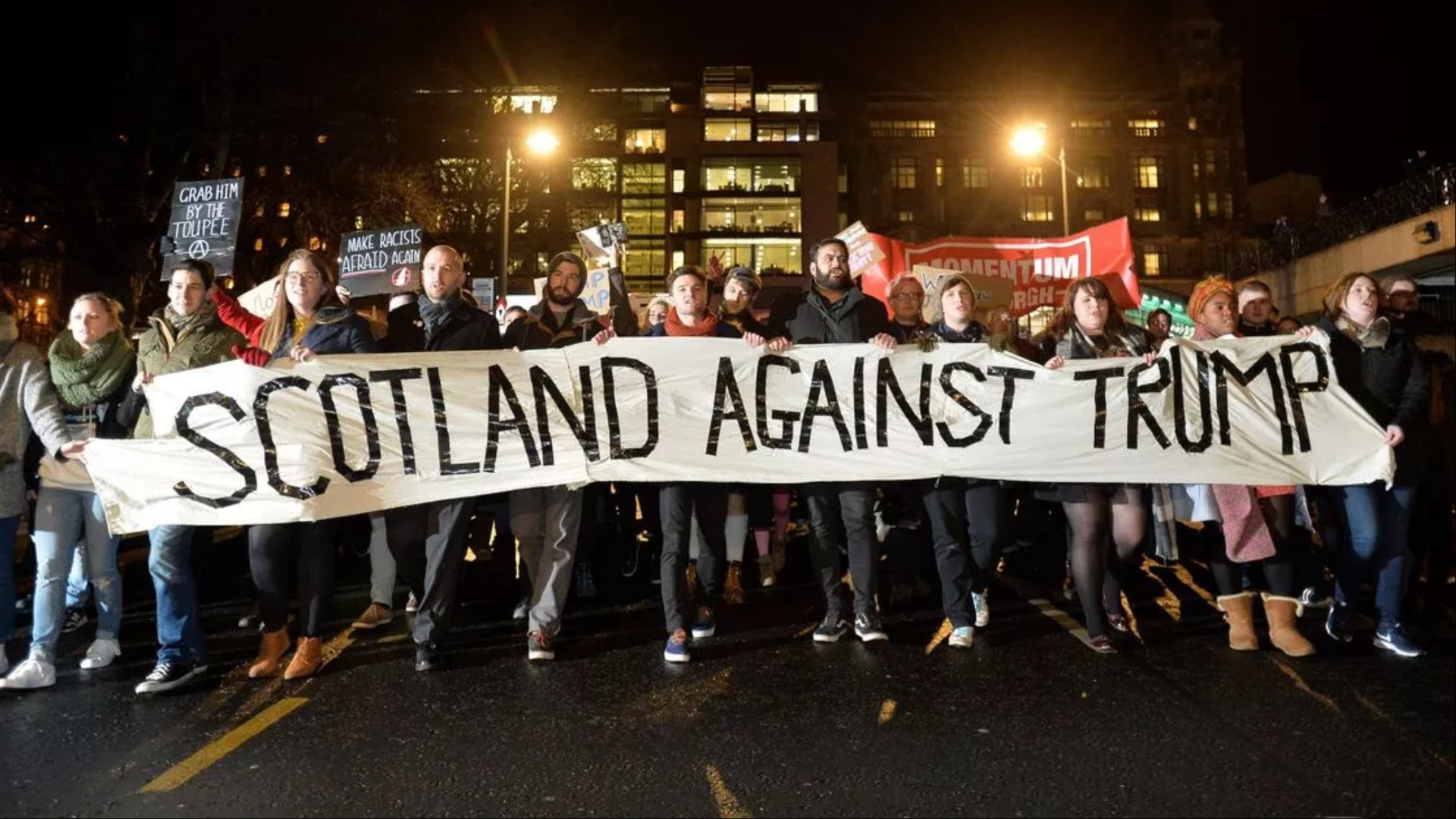
Local police departments and city officials are getting ready for anticipated protests during his visit. A variety of political, social justice, and environmental organizations have declared their plans to conduct peaceful demonstrations near Trump’s properties and in significant public areas. Some gatherings are being planned ahead, whereas others might happen spontaneously based on his activities.
Security measures have been intensified, with officials detailing strategies to handle the crowds and maintain public safety during the former president’s trip. On past visits to Scotland, Trump has attracted both outspoken supporters and equally fervent detractors, frequently leading to increased police presence and temporary road blockages.
A group of activists expressing opposition to Trump’s trip highlights various issues, such as his previous comments on immigration, climate policy, and civil liberties. Specifically, environmental organizations have expressed criticism regarding the environmental effects of some of his golf projects in the area. Additionally, some individuals perceive the visit as the unwelcome comeback of a personality they link with political discord and decisions that oppose Scottish and broader European principles.
Although there is controversy, Trump still retains a dedicated base of supporters in some sectors across the U.K., and his business ventures in Scotland persist in creating jobs and attracting tourists. Advocates assert that his involvement contributes positively to the local economy and recognize him as a prominent international personality who has the right to visit and manage his business affairs.
The visit also comes amid broader developments in Trump’s post-presidency political career. In the United States, he remains a prominent figure in the Republican Party and a potential candidate in the next presidential election. This ongoing relevance adds a layer of political significance to his travels abroad, particularly in nations that have closely followed his trajectory since leaving office.
Local authorities in Scotland have shown diverse reactions regarding Trump’s visit. While some are prioritizing public safety and the right to gather, others have personally opposed his arrival. The Scottish government, though with restricted power in foreign affairs, manages policing and public events and is working with regional officials to organize the logistical aspects.
In the meantime, Trump’s delegates have highlighted that this journey is purely for business matters, minimizing any potential political interpretations. Nonetheless, considering his international stature and the strong opinions he still elicits, the public’s response is anticipated to be anything but subdued.
In the lead-up to his arrival, media coverage has intensified, with analysts speculating on the broader meaning of the visit. Some view it as an effort to bolster his image internationally, especially as he maintains a campaign-style presence in the U.S. Others see it as a routine check-in on personal investments that have become emblematic of his brand.
Organizers of the protest argue that the demonstrations are intended to convey a message concerning the principles they feel should be upheld in democratic societies—these include transparency, inclusion, and climate responsibility. For the participants, the protests are not solely focused on Trump as a person, but rather on the broader political and environmental concerns they believe his legacy symbolizes.
As the visit unfolds, attention will likely focus not only on Trump’s itinerary, but also on how Scottish communities respond. The balance between maintaining civil order and protecting the right to protest will be closely watched, as will the tone and scale of public engagement.
In the end, Trump’s visit to Scotland transcends a mere personal journey. It encapsulates the worldwide dialogue on his ongoing influence and the hurdles democratic societies encounter in balancing political division, public disagreement, and the freedom of speech. Whether examined from the perspective of commerce, governance, or activism, the trip highlights the intricate and lasting effects of one of the most contentious political personalities of recent times.