
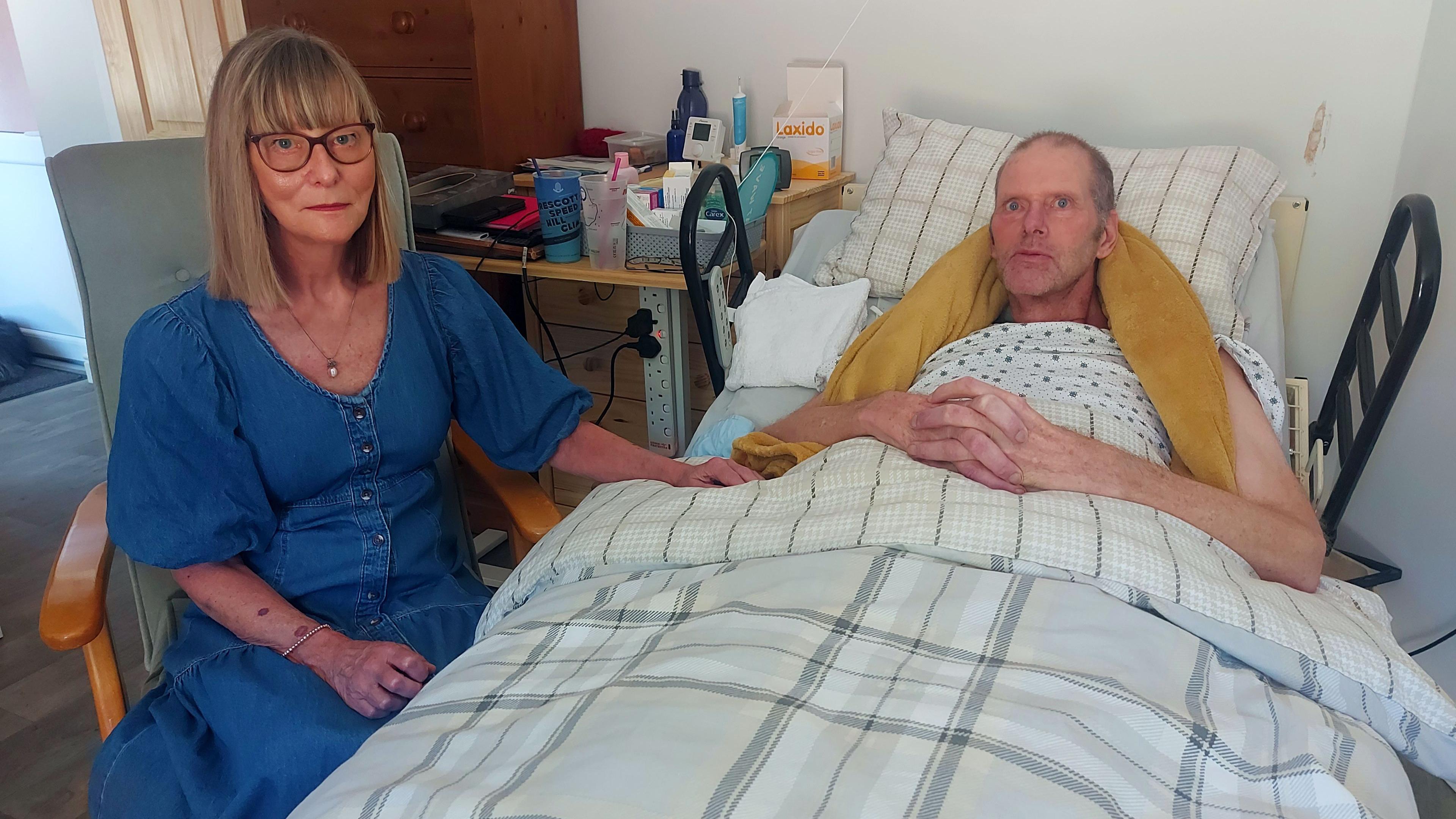

For one patient in the United Kingdom, the effort to maintain access to essential healthcare has become an unbearable burden. After a prolonged and exhausting struggle with the National Health Service (NHS), he has made the painful decision to stop taking the medication that has kept him alive.
Esta decisión no refleja una mejora en su salud ni un cambio en el consejo médico. Más bien, simboliza la culminación de obstáculos repetidos, trámites burocráticos y un aumento de la desesperación. Su experiencia destaca un problema más amplio dentro del NHS: la dificultad que algunas personas enfrentan para asegurar una atención consistente y confiable, especialmente cuando el tratamiento está fuera de los caminos habituales o la financiación se vuelve incierta.
The man, whose identity remains private, has a rare condition that requires a specific, life-sustaining drug. This medication, not widely prescribed or easily accessed, comes at a significant financial cost and must be continually approved through funding requests and administrative processes. Over the years, he has navigated countless appeals, reapplications, and consultations, each one met with mounting delays and uncertainty.
As the emotional toll mounted, so too did his physical and mental exhaustion. After years of writing letters, contacting officials, attending appointments, and defending his case, he reached a breaking point. Rather than continue to fight for each monthly supply, he chose to step away from the system.
His decision underscores the hidden cost of treatment denials or delays — not only in terms of patient health, but in the erosion of trust in the healthcare system. For patients with chronic or rare illnesses, the process of accessing medication can be as debilitating as the illness itself. Each new administrative hurdle can feel like a blow to dignity, autonomy, and well-being.
He has shown significant worry not only for himself but also for those in comparable situations. “There are countless individuals slipping through the gaps,” he pointed out. “People who lack the strength, time, or means to continue battling. In the end, the struggle transforms into the ailment.”
Advocacy groups have voiced similar worries, emphasizing that although the NHS is essential for millions, it needs to focus on inequities in accessing specialized care. When critical treatments undergo lengthy approval procedures or face undue restrictions, individuals may find themselves in uncertainty — having to decide between their well-being and their mental comfort.
Health policy experts suggest that systemic reform is needed to ensure that those with rare or complex conditions are not routinely subjected to such draining ordeals. This includes improving the consistency of decision-making across NHS trusts, ensuring transparency in funding decisions, and providing dedicated support for patients navigating specialized treatment requests.
In response to growing concerns, some NHS bodies have acknowledged that improvements are necessary and that a review of current processes is underway. However, for many patients like this man, these potential changes may come too late.
His situation has prompted renewed calls for empathy in healthcare administration — a reminder that policies, no matter how well-intended, must center the patient’s lived experience. His story is not just about a man choosing to stop treatment; it is about a healthcare structure that, in his words, “wore me down more than my illness ever did.”
As he progresses without the medication, he encounters a future filled with uncertainty. However, his choice has initiated discussions among healthcare professionals, advocates, and policymakers — dialogues that have the potential to bring about change. In the meantime, his narrative highlights a clear instance of what can occur when a patient’s persistence is greeted with indifference rather than care.