
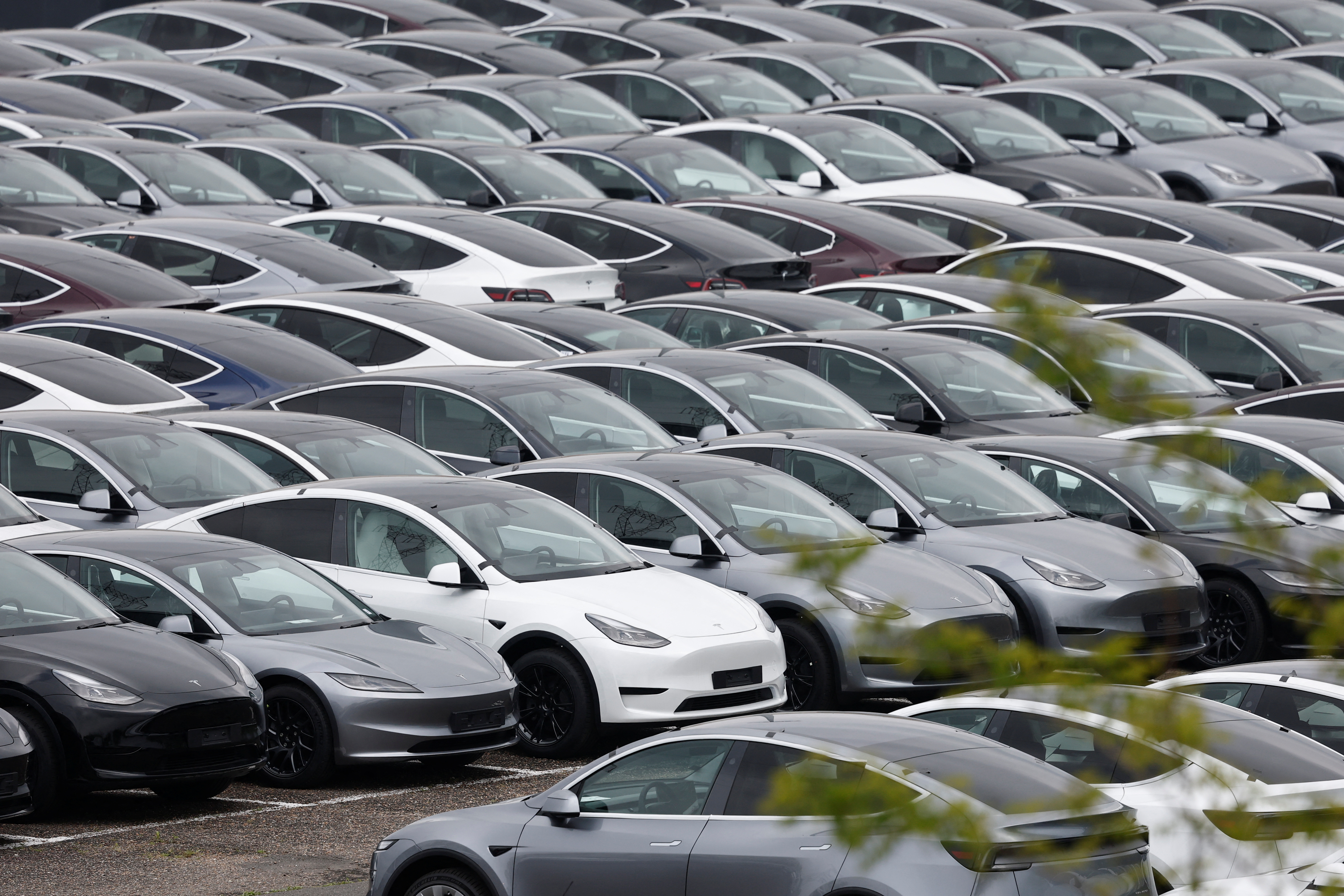

Tesla, which was once the undeniable frontrunner in the electric vehicle (EV) industry, is presently encountering a challenging financial phase. Despite attempts by its CEO Elon Musk to disassociate from recent political disputes — such as withdrawing from public disagreements with the White House — the company is still experiencing a downturn, characterized by decreasing revenue, waning demand, and heightened competition.
Throughout the last year, Tesla’s stock has experienced fluctuations, mirroring wider worries about the firm’s performance and strategic path. While Musk’s presence in political circles has diminished lately, this change has not yet resulted in a recovery for Tesla’s main business figures. Both analysts and investors are closely monitoring the company’s quarterly financial results, delivery figures, and its capacity to remain a leader in a growingly crowded electric vehicle market.
A decrease in interest within a developing electric vehicle sector
One of the significant issues facing Tesla is the nature of the electric vehicle market itself. What began as a fast-growing field with few competitors has transformed into a highly competitive arena. Established car manufacturers such as Ford, General Motors, and Volkswagen have expanded their electric vehicle offerings, while newer companies like Rivian, Lucid, and BYD have gained consumer interest with creative designs and enticing pricing strategies.
In some regions, Tesla’s market share has declined notably as buyers are offered a wider selection of electric vehicles that match — and in some cases exceed — Tesla’s offerings in performance, features, and affordability. While Tesla still leads in key markets, the dominance it once enjoyed is under pressure. Its models, particularly the flagship Model S and Model X, have seen stagnating sales, and even the popular Model 3 and Model Y are facing more competition than ever.
Reductions in prices and worries about profit margins
In a bid to boost demand, Tesla has implemented several price reductions on its main models during 2023 and 2024. Although these price cuts have made the cars more attainable for a wider range of consumers, they have also led to worries regarding sustained profitability.
By reducing prices to remain competitive, Tesla has diminished part of its profit margins, which were previously a significant strong point that set the company apart from other car manufacturers. In the past, Tesla could charge extra for its technology and brand prestige, but the market is currently less inclined to spend a lot for what is now considered a more typical product type.
This strategy of pricing aggression may win short-term gains in volume, but some industry observers question whether it’s sustainable over the long haul, especially as raw material costs fluctuate and production costs remain significant.
The declining political influence and evolving public persona of Elon Musk
For a long time, Elon Musk’s bold expression was a key component of Tesla’s public persona. His activity on social media, controversial remarks, and political provocations frequently garnered both praise and disapproval. Yet, in the past few months, Musk has adopted a more subdued stance regarding political commentary, concentrating on product innovation and the management of the company.
While some investors and stakeholders welcome this return to a more business-focused image, others note that the reputational damage from Musk’s prior political engagement still lingers. The CEO’s association with polarizing topics had alienated portions of Tesla’s customer base, particularly among environmentally conscious consumers who had once formed the core of the brand’s appeal.
Even as Musk steps back from the political spotlight, Tesla continues to deal with the consequences of earlier actions — including consumer hesitation and skepticism that could be influencing purchase behavior.
Innovations on the horizon — but not enough to calm investor nerves
Tesla has been proactive in addressing these obstacles. The company persistently advances the limits of EV technology with new developments, such as the eagerly anticipated Cybertruck, a greater emphasis on autonomous driving capabilities, and continuous growth of its AI and robotics divisions.
Although there have been significant improvements, certain investors are still doubtful that progress by itself will rekindle expansion. The setbacks in manufacturing the Cybertruck, along with moderate interest from the general public, have lowered expectations. Tesla’s bold objectives regarding autonomous vehicles — including assurances of complete self-driving functionality — have not yet been realized to the extent or dependability that Musk predicted.
Moreover, as other automakers develop their own advanced driver assistance systems and begin integrating AI-driven features, Tesla’s first-mover advantage in innovation is diminishing. Investors are increasingly asking whether the company’s future products will generate the same enthusiasm and revenue potential as its early models did.
International headwinds and operational hurdles
Tesla’s global operations also present challenges. In China, one of the company’s largest markets, demand has softened amid rising competition from local manufacturers. Chinese automakers are offering feature-rich electric vehicles at lower prices, and their national presence gives them a distribution and manufacturing edge.
In Europe, regulatory shifts and economic uncertainties have also contributed to slower EV sales growth, affecting Tesla’s market penetration. Additionally, ongoing supply chain disruptions, particularly in battery components and semiconductor availability, continue to impact production schedules and delivery timelines.
Tesla has put a substantial amount of resources into its Gigafactories located in the United States, Germany, and China. However, due to the high capital demands of these facilities, any reduction in worldwide demand can critically affect the company’s overall profitability. Maintaining operational efficiency is essential as Tesla manages its growth while keeping expenses in check.
Trust of investors facing challenges
With revenue growth flattening and cost pressures mounting, investor sentiment has become more cautious. Tesla’s valuation, once buoyed by future-facing optimism and tech-style growth projections, is being recalibrated as more traditional automotive metrics take precedence.
Many shareholders are now prioritizing consistent delivery performance, profitability, and the ability to scale effectively over hype or visionary declarations. While some still believe in Tesla’s long-term promise, especially in the AI and energy sectors, the company will need to deliver tangible results to maintain confidence in the market.
A pivotal period for Tesla’s future
Tesla’s current challenges do not signal an end to the company’s influence in the electric vehicle industry, but they do mark a critical turning point. As the brand matures, it must evolve from a disruptive startup into a stable, global manufacturer capable of weathering economic cycles, rising competition, and shifting consumer preferences.
Elon Musk’s choice to lower his presence in political matters might be a component of a larger plan to redirect Tesla’s storyline towards creativity and achieving high standards in operations. It remains uncertain if this adjustment will be sufficient to guide the company towards continuous growth.
In the months ahead, all eyes will be on Tesla’s financial performance, new product launches, and ability to retain — or regain — its edge in a market it helped define. The journey forward will likely be shaped not only by technological breakthroughs, but also by the company’s ability to navigate a more crowded, competitive, and complex global marketplace.